
Why Summer Is the Perfect Time to Teach Language Concepts in Speech Therapy
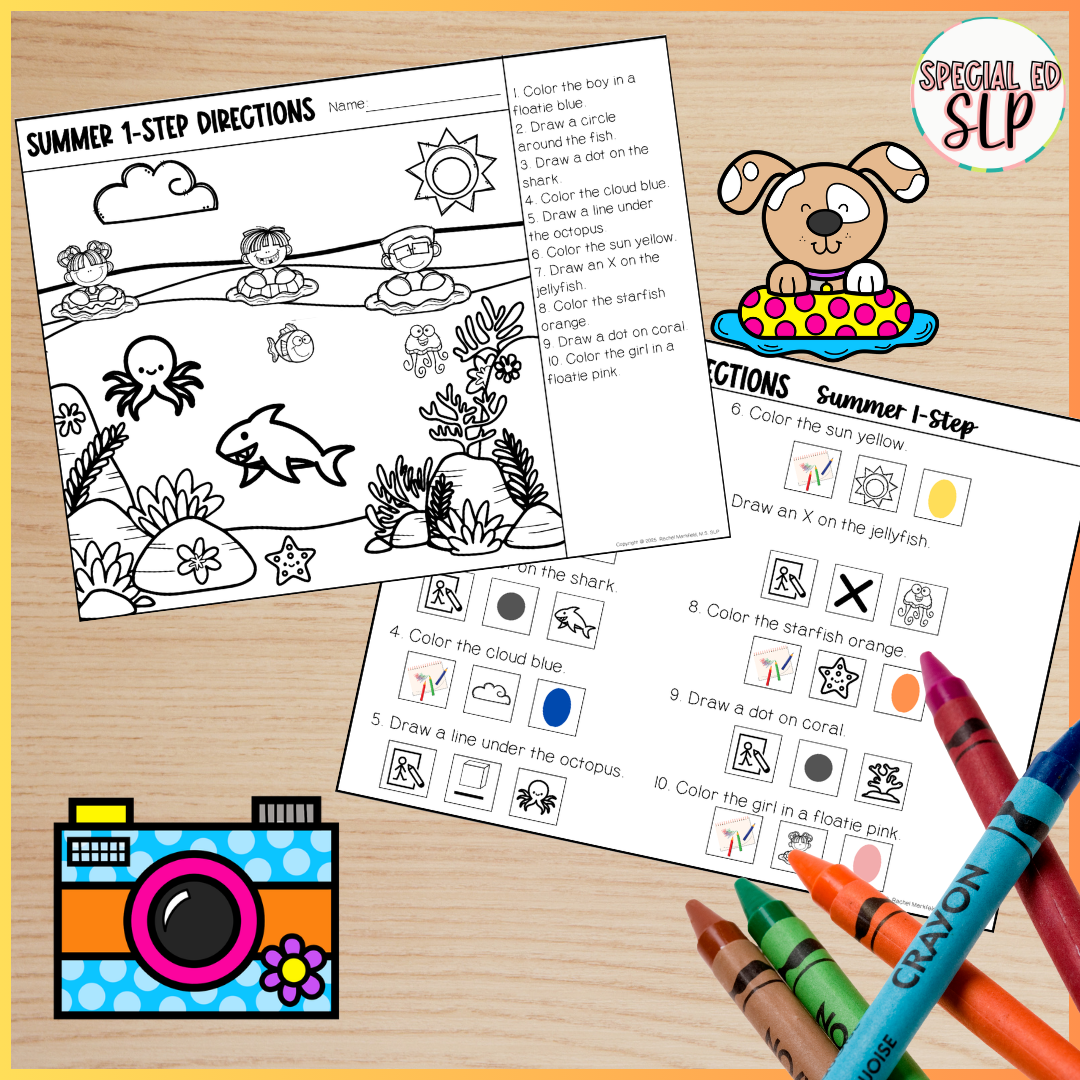
Summer brings a welcome change of pace, but it can also create challenges for speech-language pathologists and special educators. Whether you're providing Extended School Year (ESY) services, running summer therapy sessions, or helping students maintain their skills over break, keeping students engaged is often just as important as choosing the right goals.
One area that deserves continued attention is language concepts. Concepts such as following directions, understanding spatial relationships, answering WH questions, and building vocabulary are foundational skills that support classroom success year-round. By using fun, seasonal activities, you can reinforce these concepts while keeping students motivated and interested.
Why Language Concepts Matter
Language concepts are the building blocks of receptive language. Students use these skills every day when they:
Follow one- and two-step directions
Answer questions about stories or conversations
Understand location words like under, behind, and next to
Compare quantities such as more, less, all, and none
Learn and apply new vocabulary
When these concepts are difficult, students may struggle to follow classroom routines, participate in discussions, or complete academic tasks independently.
Why Summer Themes Increase Engagement
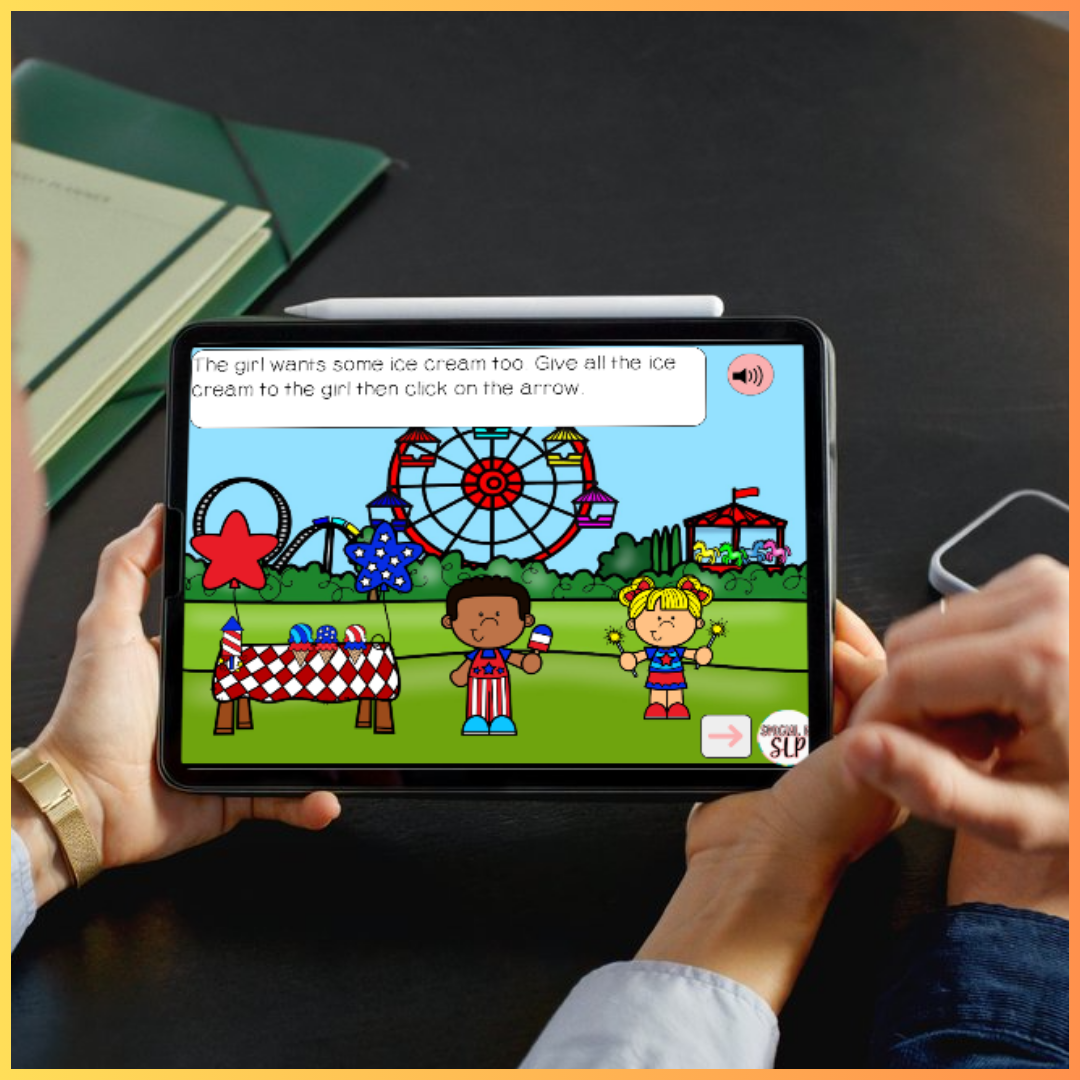
Many students are naturally excited about summer topics. Beaches, ice cream, barbecues, vacations, sports, and Fourth of July celebrations create familiar, meaningful contexts for learning.
Instead of practicing isolated skills, students can connect language concepts to experiences they recognize. This makes therapy feel less like work and more like play.
For example, you can practice:
Following directions while decorating a beach scene
Answering WH questions about a summer story
Identifying vocabulary related to vacations and outdoor activities
Practicing spatial concepts using beach or picnic pictures
Comparing quantities with summer-themed objects
Because the activities are connected by a common theme, students often remain engaged for longer periods of time.
Whatever it is, the way you tell your story online can make all the difference.
Here’s more ideas on how to make following directions fun this summer
Build Multiple Skills in One Session
One of the biggest challenges for SLPs is serving groups with different goals. Rather than planning separate activities for every objective, look for resources that allow you to address several receptive language skills within the same lesson.
For example, you might begin with a following directions activity, transition into vocabulary practice, and finish with a short story that encourages students to answer WH questions using the same summer theme.
This type of progression helps students practice individual concepts before applying them in a more meaningful context.
Digital and Printable Activities Give You Flexibility
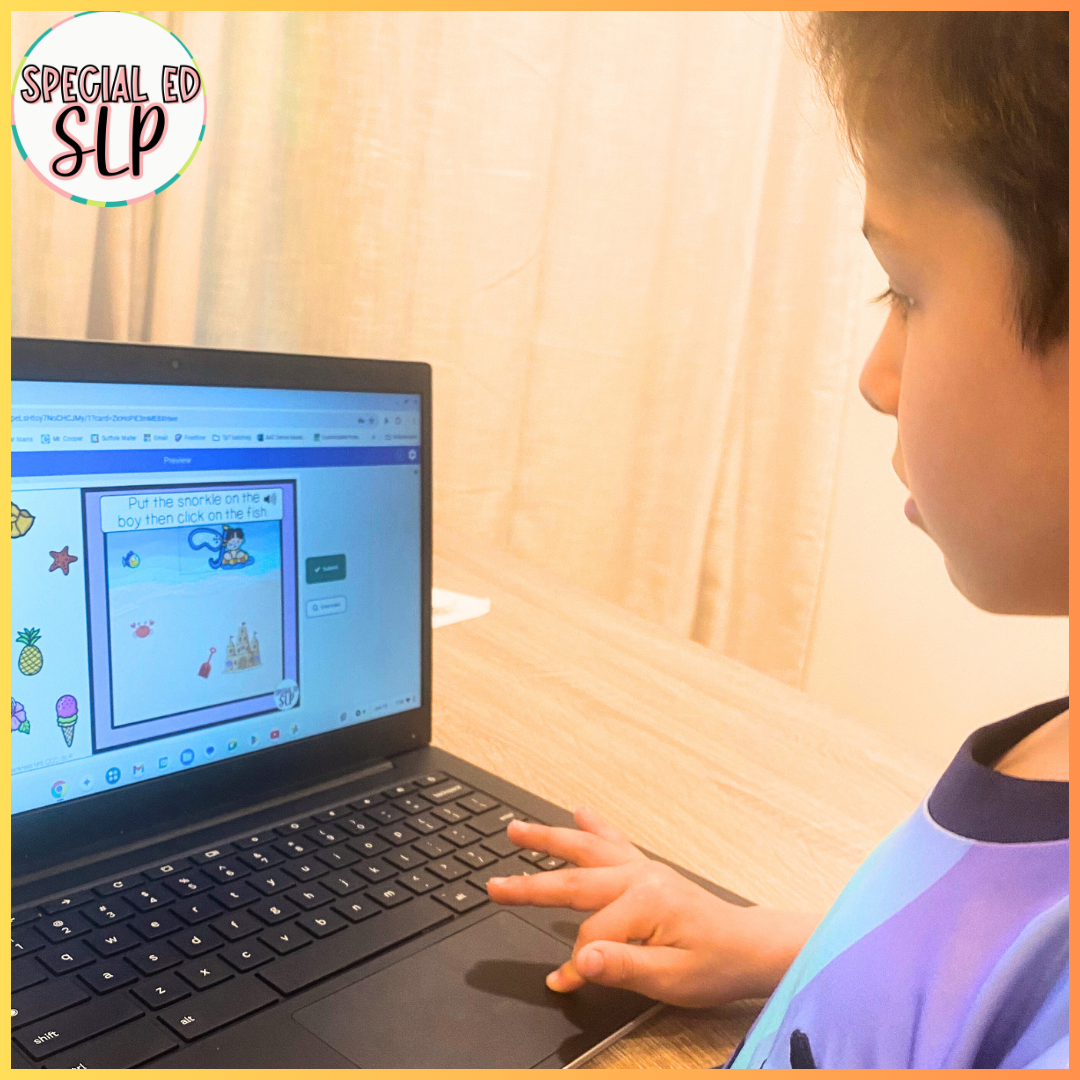
Summer schedules can look different from the regular school year. Some students attend in person, while others receive teletherapy or take home practice materials.
Using a combination of digital and printable resources makes it easier to adapt your sessions without recreating lesson plans every week. Digital activities work well for interactive instruction, while printable worksheets provide opportunities for independent practice, homework, or carryover.
Having both options available allows you to meet the needs of a wider range of learners and settings.e.
A Resource That Supports Multiple Language Goals
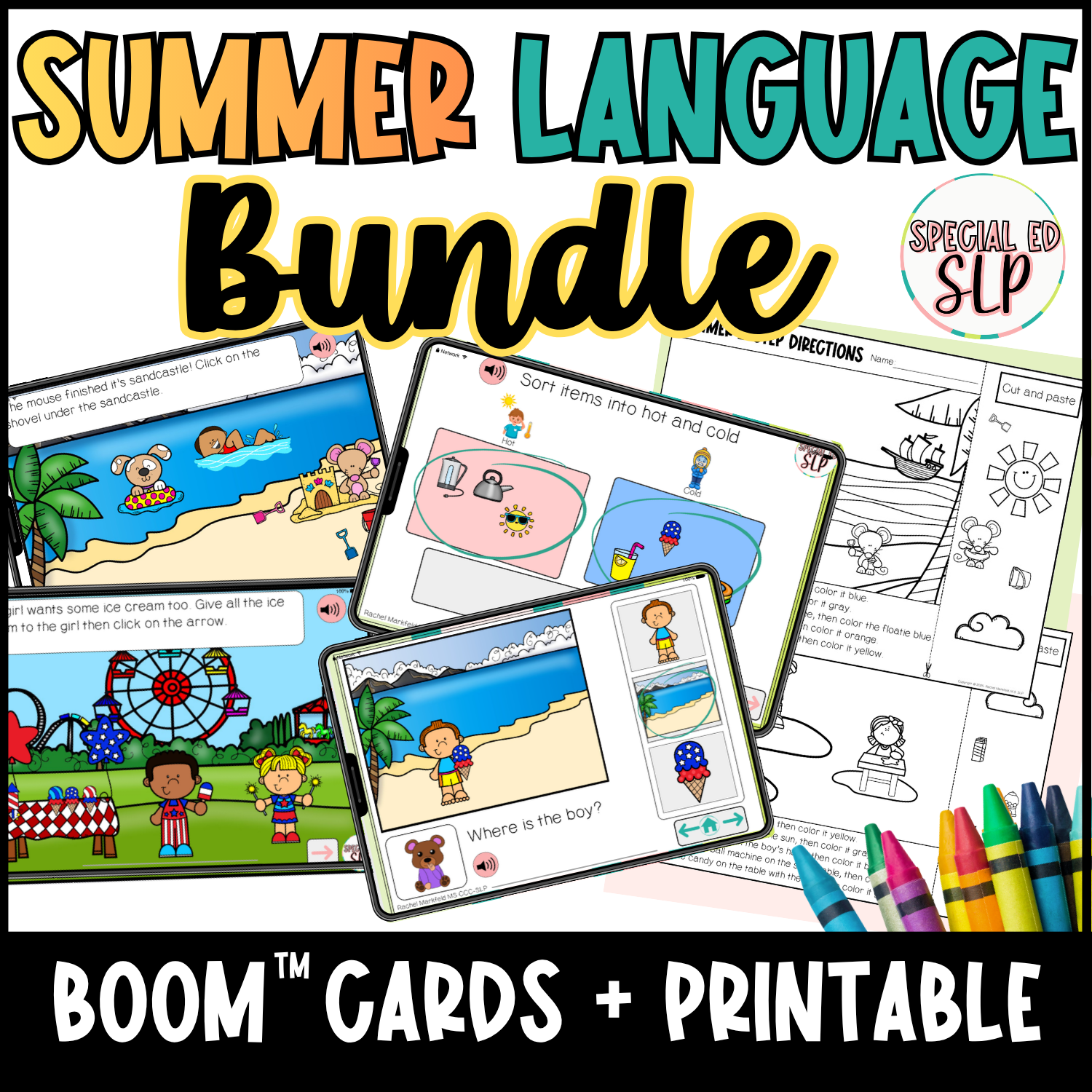
If you're looking for one resource that targets several receptive language skills, my Summer Language Concept Bundlewas designed to help simplify planning.
Inside the bundle you'll find activities that target:
Descriptive concepts (hot vs cold)
4th of July language story
Soccer themed story to target Gestalt Language Processors (GLP)
Digital Boom Cards and printable worksheets
Because each activity shares a common summer theme, students can practice individual skills and then apply them in connected language activities.
Grab a Free Sample
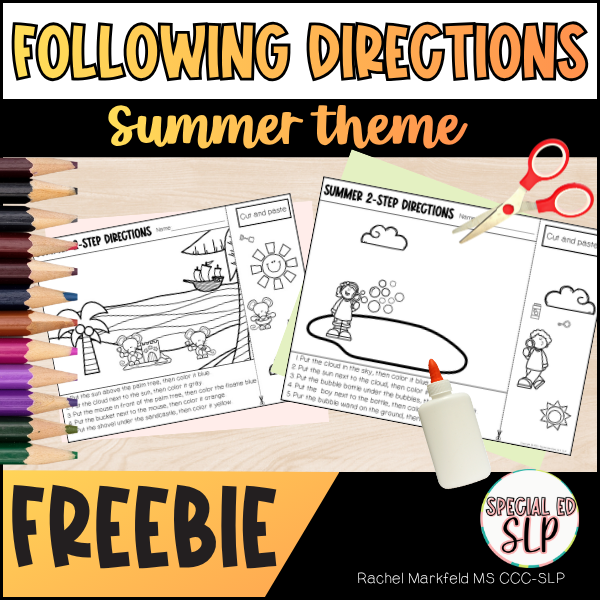
If you'd like to see whether these activities are a good fit for your students, start with my FREE Summer Following 2-Step Directions Worksheet Activities.
It's an easy way to introduce summer-themed receptive language practice while giving students meaningful opportunities to follow directions.
Summer doesn't have to mean putting language learning on pause. In fact, seasonal themes can make receptive language instruction more engaging, functional, and enjoyable for students.
Whether you're working on following directions, vocabulary, WH questions, or other language concepts, using connected summer activities can help students practice skills in meaningful contexts while reducing your lesson planning time.
If you're ready to simplify your summer therapy planning, be sure to check out the Summer Language Concept Bundle, and don't forget to download the free sample to get started.