10 Engaging Action Verb Activities for Nonverbal Students
Teaching action verbs in your speech therapy lesson to nonverbal students can feel like a puzzle with missing pieces. You want to build their language foundation, but how do you teach verbs without words or actions? The good news: it is possible, and it doesn’t require hours of prep or perfectly verbal responses. These 10 action verb activities are designed to support receptive and expressive language in creative, low-pressure ways.
If you’re working with minimally verbal or nonverbal students in speech therapy, you’ve probably run into the same challenges:
Students struggle to label or act out verbs
You need visuals and repetition to build understanding
Traditional flashcards fall flat
Your speech therapy time is limited, and so is your energy
You’re not alone. Targeting action verbs with nonverbal students in speech therapy can be tricky, but the right tools and strategies make all the difference.
Here are 10 effective, SLP-approved action verb activities that support your nonverbal students, and yes, your prep time too.
1. Animated Boom Cards for Verb Identification
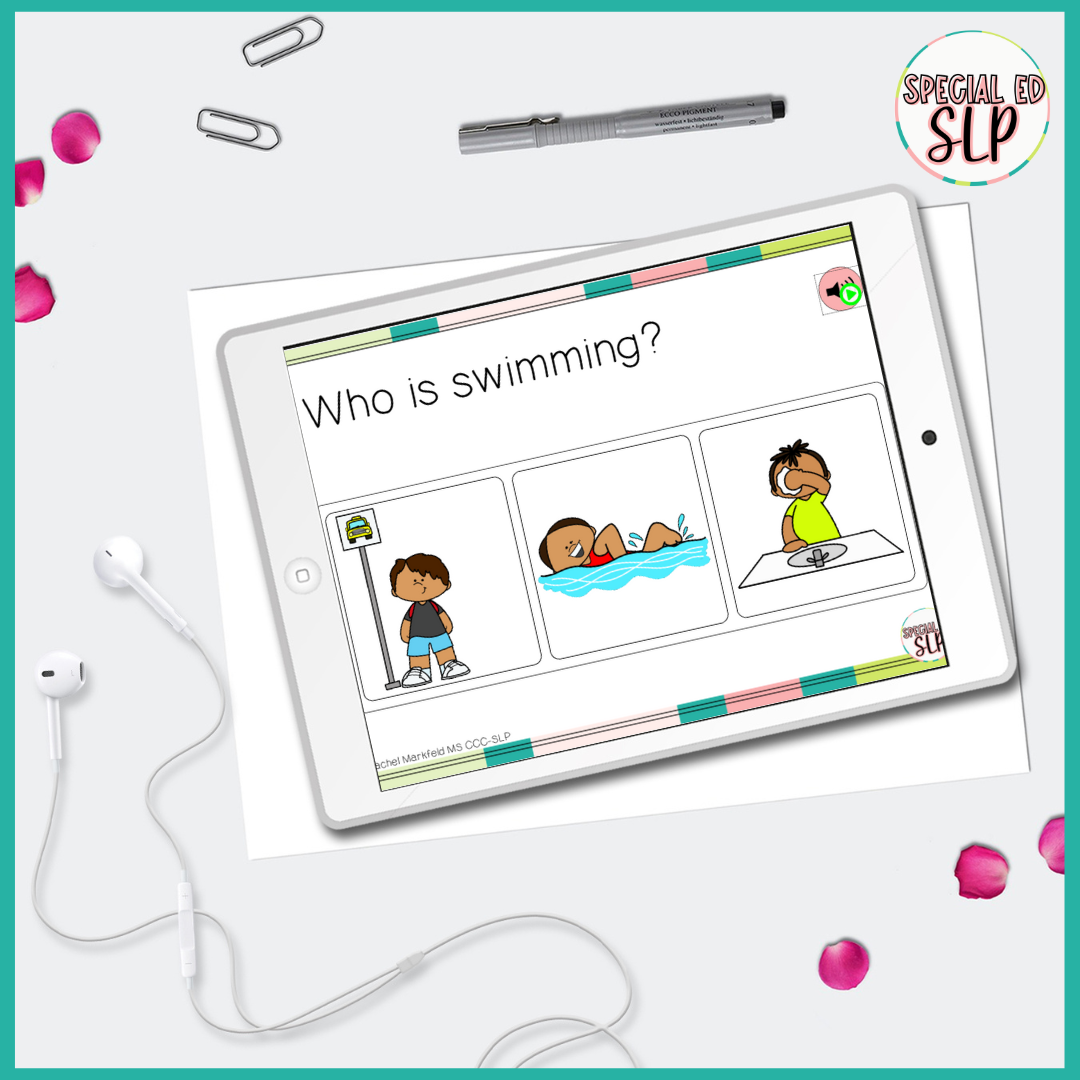
Use engaging animated GIFs to help students match visuals to action words. No verbal output required— just point, drag, or tap.
🧠 Targets: Receptive language, visual discrimination
2. Cut-and-Paste Verb Flashcards
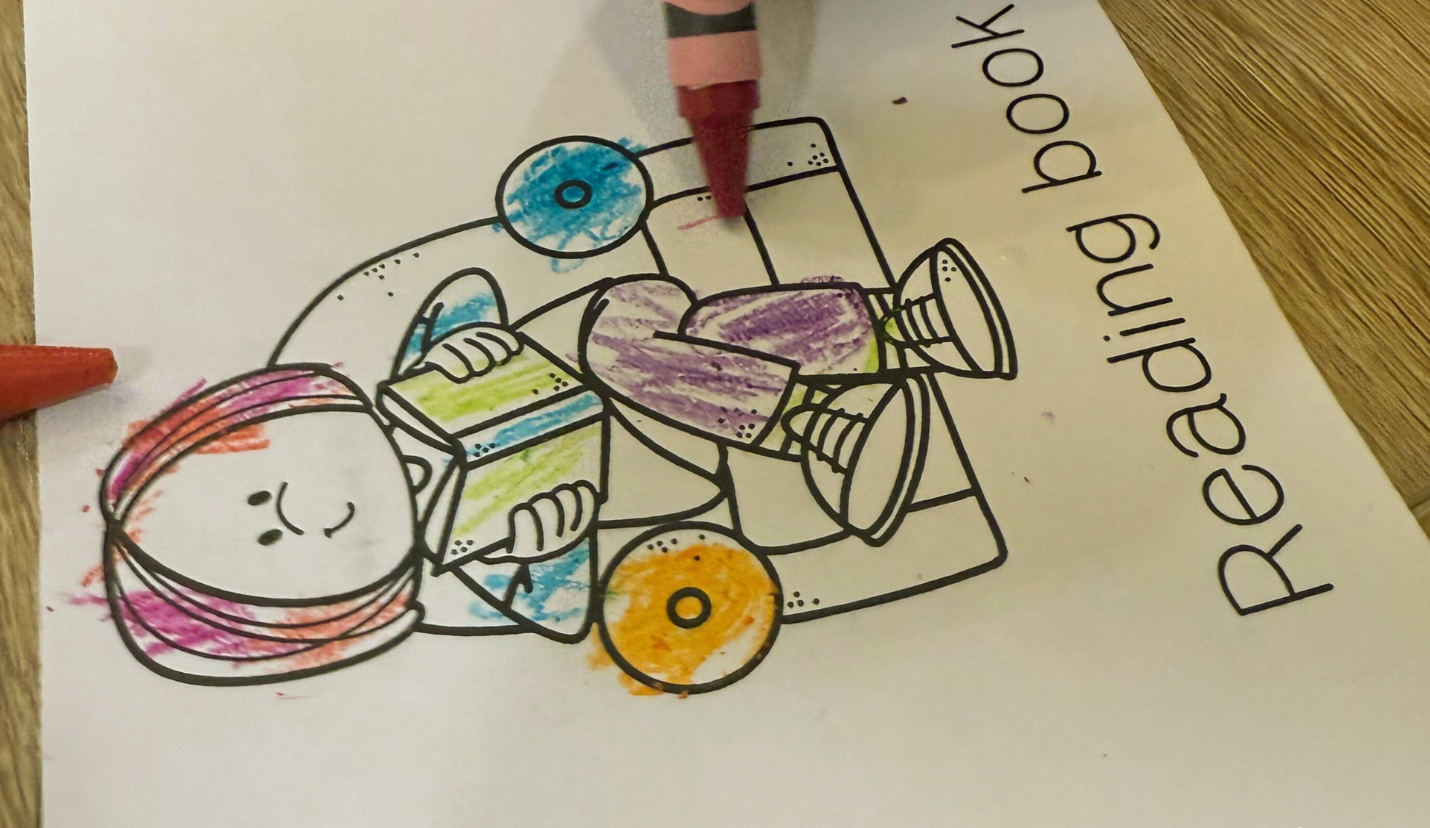
Give students hands-on practice by sorting or matching printed flashcards with verbs in action.
Bonus: reusable if laminated!
Whatever it is, the way you tell your story online can make all the difference.
🧠 Targets: Receptive skills, task completion
3. Act It Out! (Movement Break Meets Language)

Call out (or show) a verb and have students act it out. For nonverbal students, encourage gesture imitation or AAC selections.
4. He Is / She Is Adapted Books
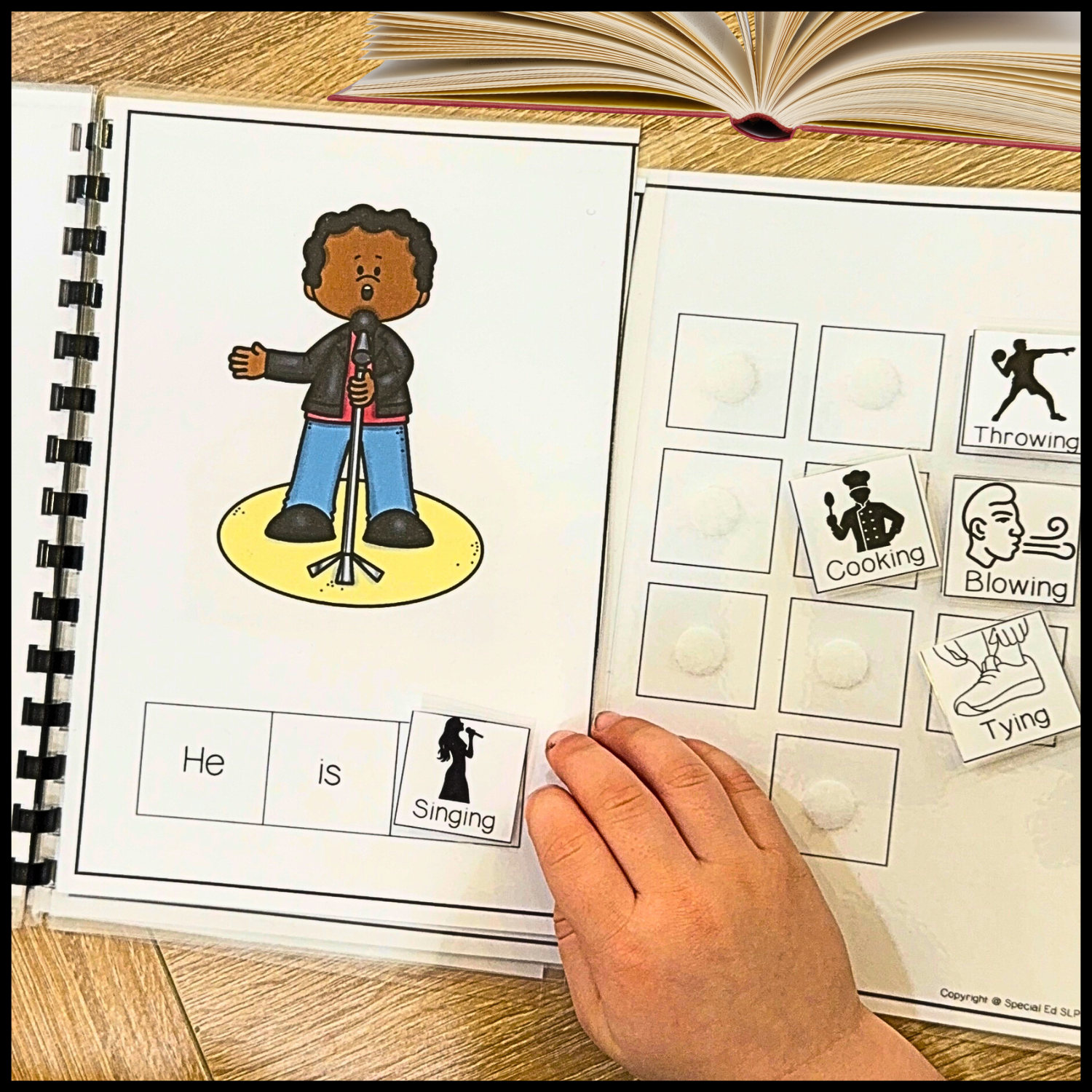
These interactive and adapted printable books pair pronouns with verbs, using clear visuals and predictable language.
🧠 Targets: Pronoun use, MLU growth, core vocabulary
5. Noun + Verb Sentence Building Worksheets
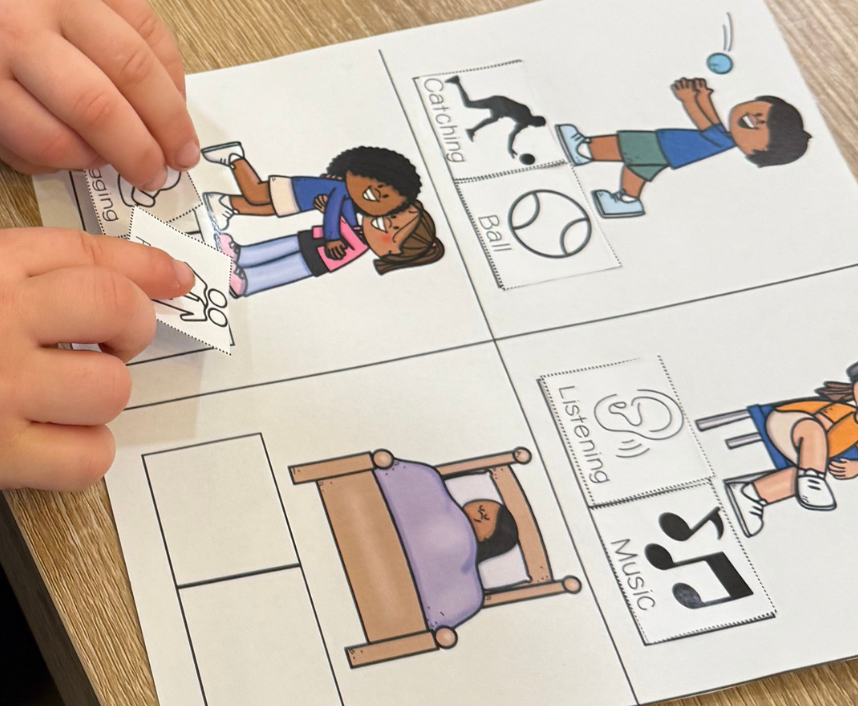
Use your print-and-go worksheets to help students build two-word phrases like “catching ball” or “listening music.” These visuals make it easy to scaffold expressive language
no prep needed.
🧠 Targets: Expressive language, early sentence structure, AAC modeling
6. Verb Sorting with Real Photos
Sort actions into categories: indoor vs. outdoor, fast vs. slow, etc. This adds context and categorization to verb learning.
7. Digital Sentence Builders (Boom Cards)
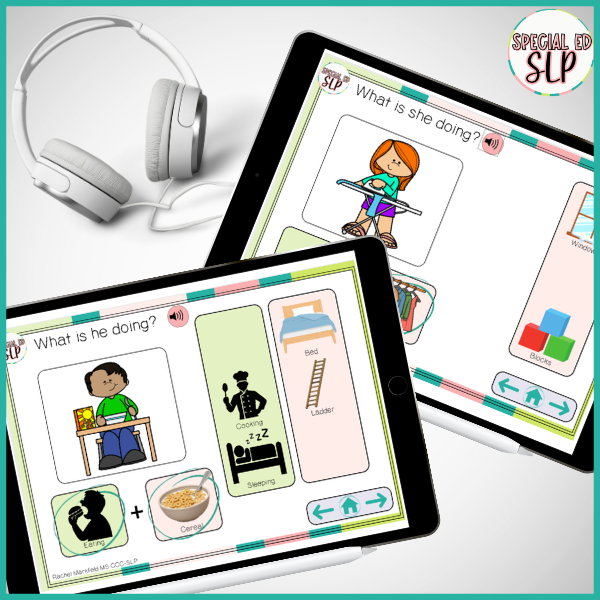
Students choose from multiple verbs and nouns to complete a sentence. The randomized, self-checking cards help reinforce generalization.
🧠 Targets: Grammar, comprehension
8. Visual Schedules That Use Verbs
Incorporate common verbs into student schedules (e.g., “wash,” “eat,” “play”) to promote everyday functional language.
9. Color & Black-and-White Worksheets
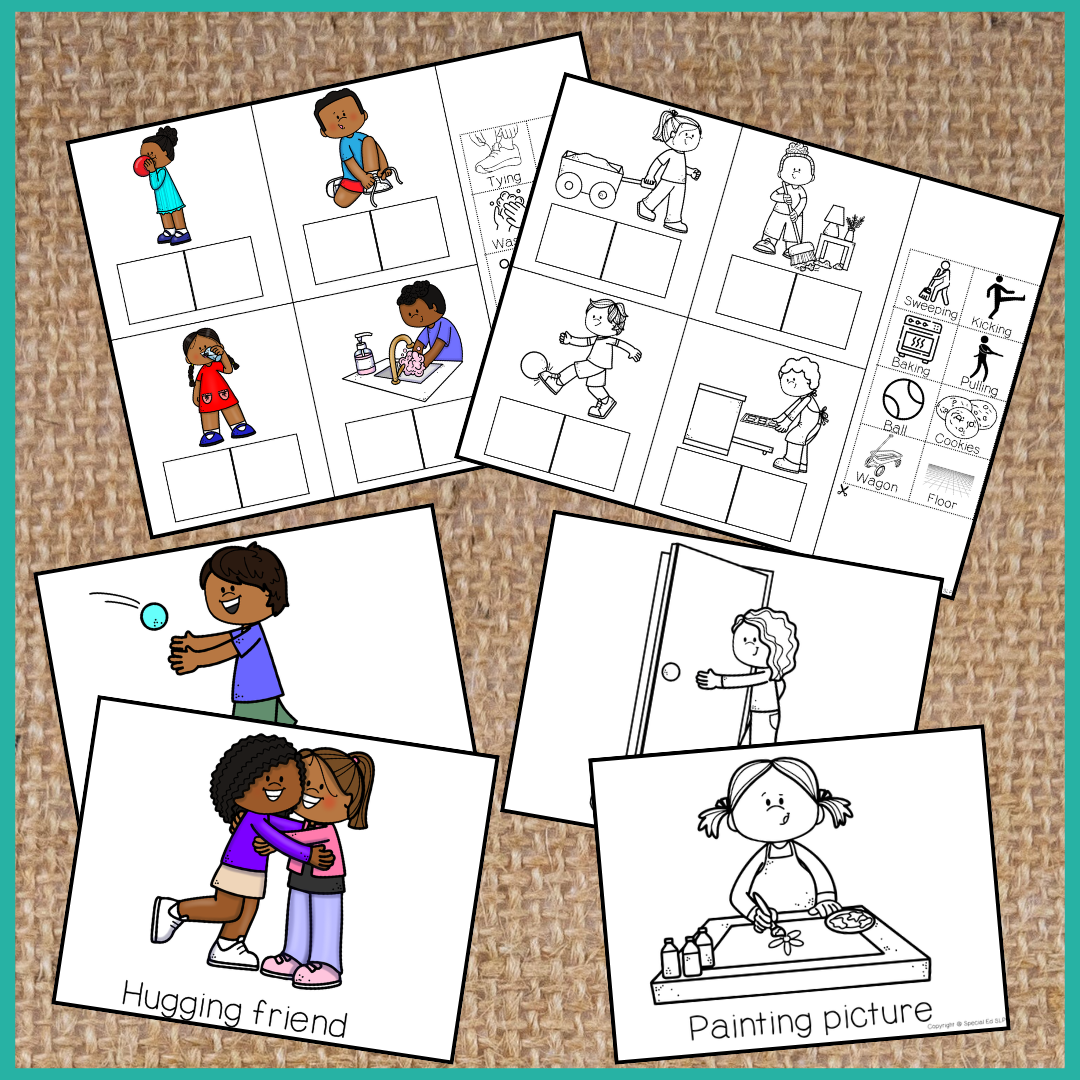
These low-prep printables are great for centers, homework, or repetition. Use the B&W versions for coloring or dry-erase folders.
10. Progress Tracking Made Easy
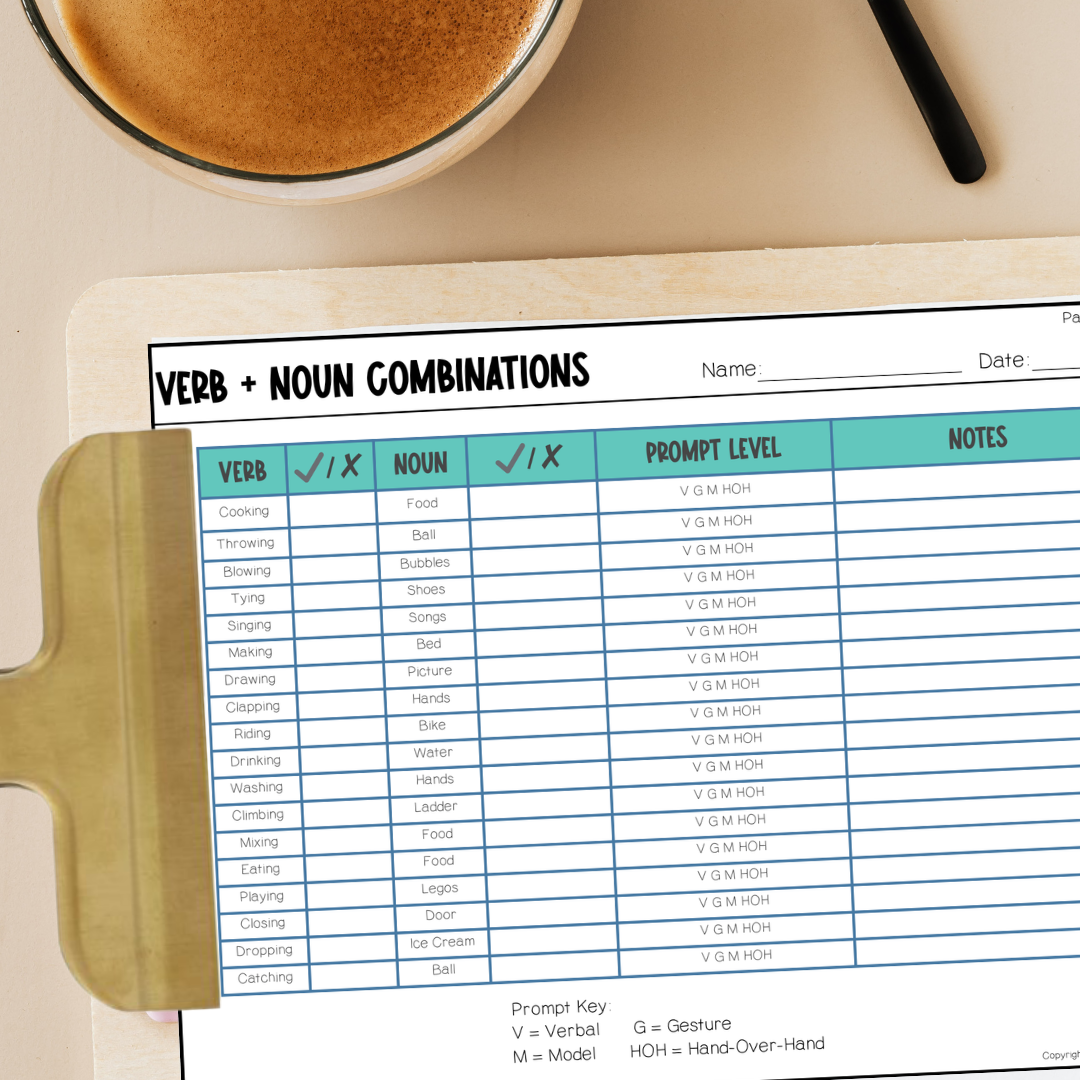
Data collection doesn’t have to be a hassle.
Use included tracking sheets to monitor growth and align with IEP goals.
Want all of these activities in one easy-to-use bundle? 🎉
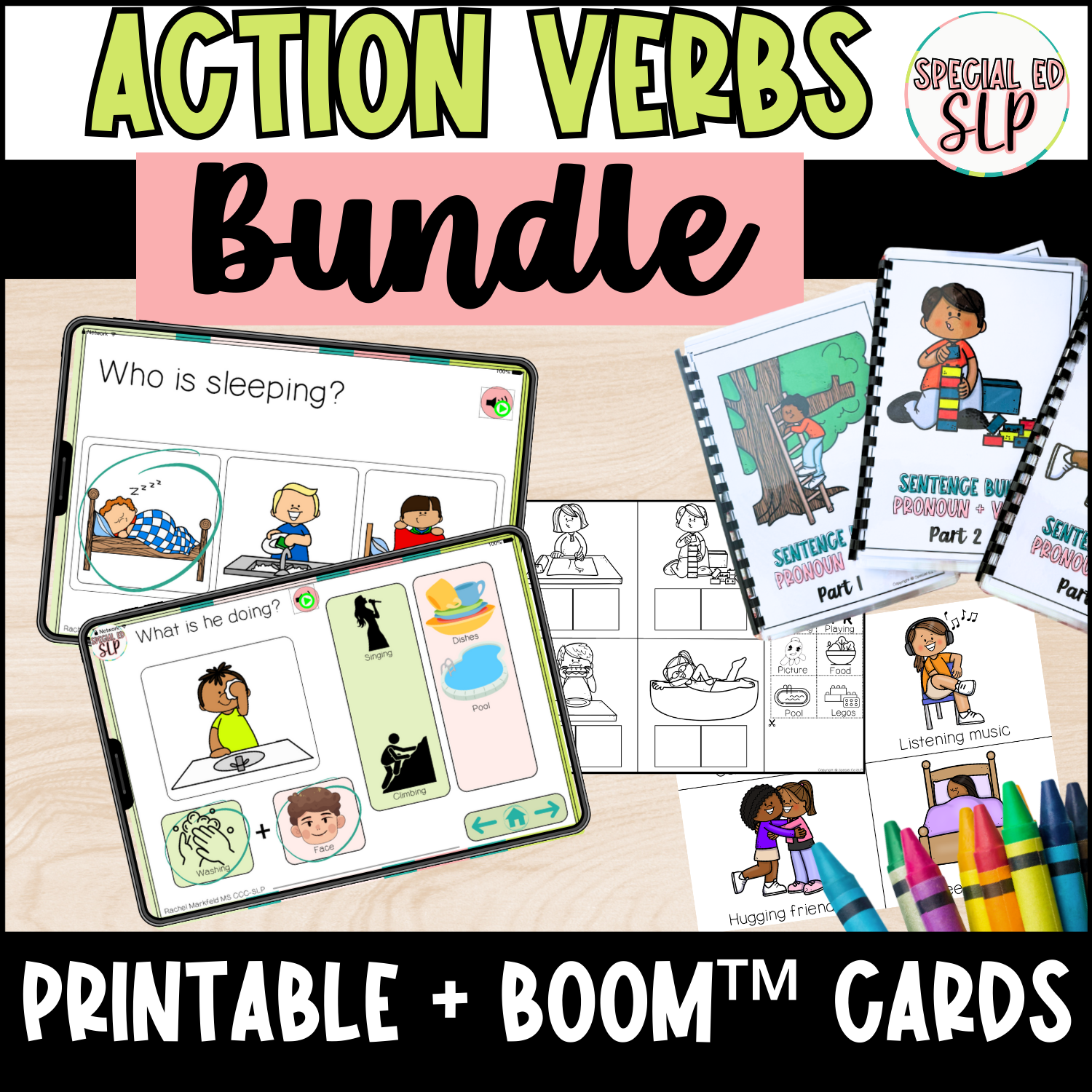
👉 Grab the Action Verbs Bundle on TPT — digital + printable, low-prep, and designed for SLPs working with nonverbal learners.
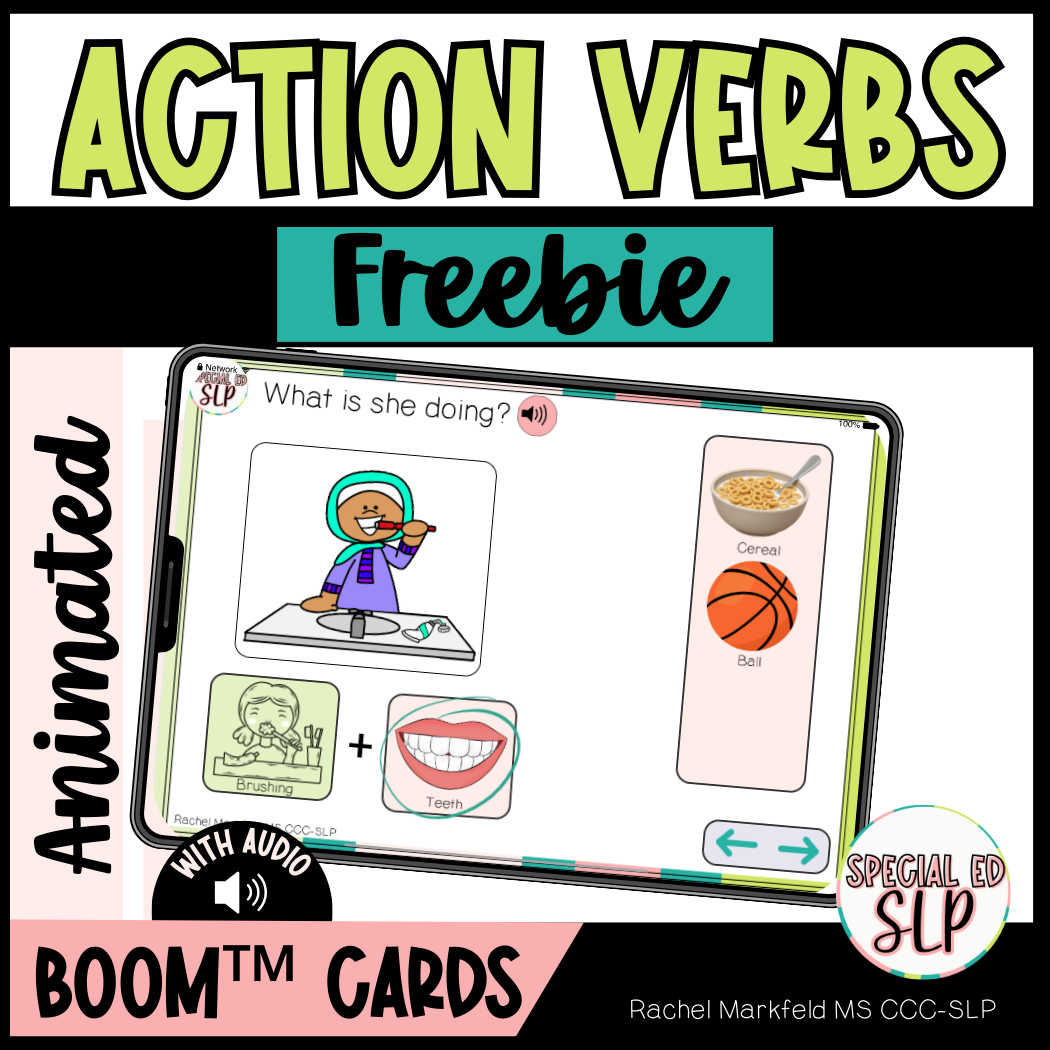
Don’t have a freebie yet? Subscribe and Try:
FREEBIE Action Verbs Animated Boom™ Cards I Identify, Label & Combine two words
Teaching verbs doesn’t have to be a guessing game. With the right visuals, interactivity, and tools tailored to your students’ needs, even nonverbal learners can start understanding and using action words. Whether you’re using digital Boom Cards or printable sentence builders, the key is to keep it visual, consistent, and accessible.
You’re already doing the hard work—let this bundle make it a little easier. 💬❤️
Font Credit
Clipart credit
Clipart and font credit: