
Fall Themed Speech Therapy Activities for Teaching Receptive Language Concepts
Want some ideas for fall themed therapy activities in speech therapy? Fall is a great time to bring seasonal themes into your speech therapy sessions. Pumpkins, leaves, apples, and other familiar fall vocabulary can add a little variety to your September, October and November speech therapy activities while giving students repeated opportunities to practice important receptive language skills.
But a cute fall theme alone isn’t enough, especially when you are working with autism, AAC users and special education students who need explicit instruction and visual support to understand basic language concepts.
For speech-language pathologists SLPs working with students in special education and autism programs, fall themed speech therapy activities can provide structured opportunities to practice receptive language concepts such as following directions, prepositions, spatial concepts, WH questions, vocabulary, and descriptive words… and teachers are time poor. No prep materials give time back in our busy day!
Here are several ways to incorporate those skills into your fall speech therapy sessions while keeping activities visual and purposeful.
1. Practice Following 1-Step Directions + 2-Step Directions
“Follow the directions” sounds simple, but there can be a lot of language packed into one direction.
Students may need to understand the vocabulary in the direction, remember the information, distinguish between different objects or pictures, and understand language concepts that tell them what to do and where to do it.
Adding a second step creates another layer of complexity.
Fall-themed visuals for autism and AAC users can give students a concrete way to practice following directions without relying only on verbal information.
Start with simple one-step directions using familiar pictures. For example, students might identify or manipulate pictures of leaves, pumpkins, apples, or other fall items based on a verbal direction.
As students become more successful, increase the amount of information they need to process or move into two-step directions.
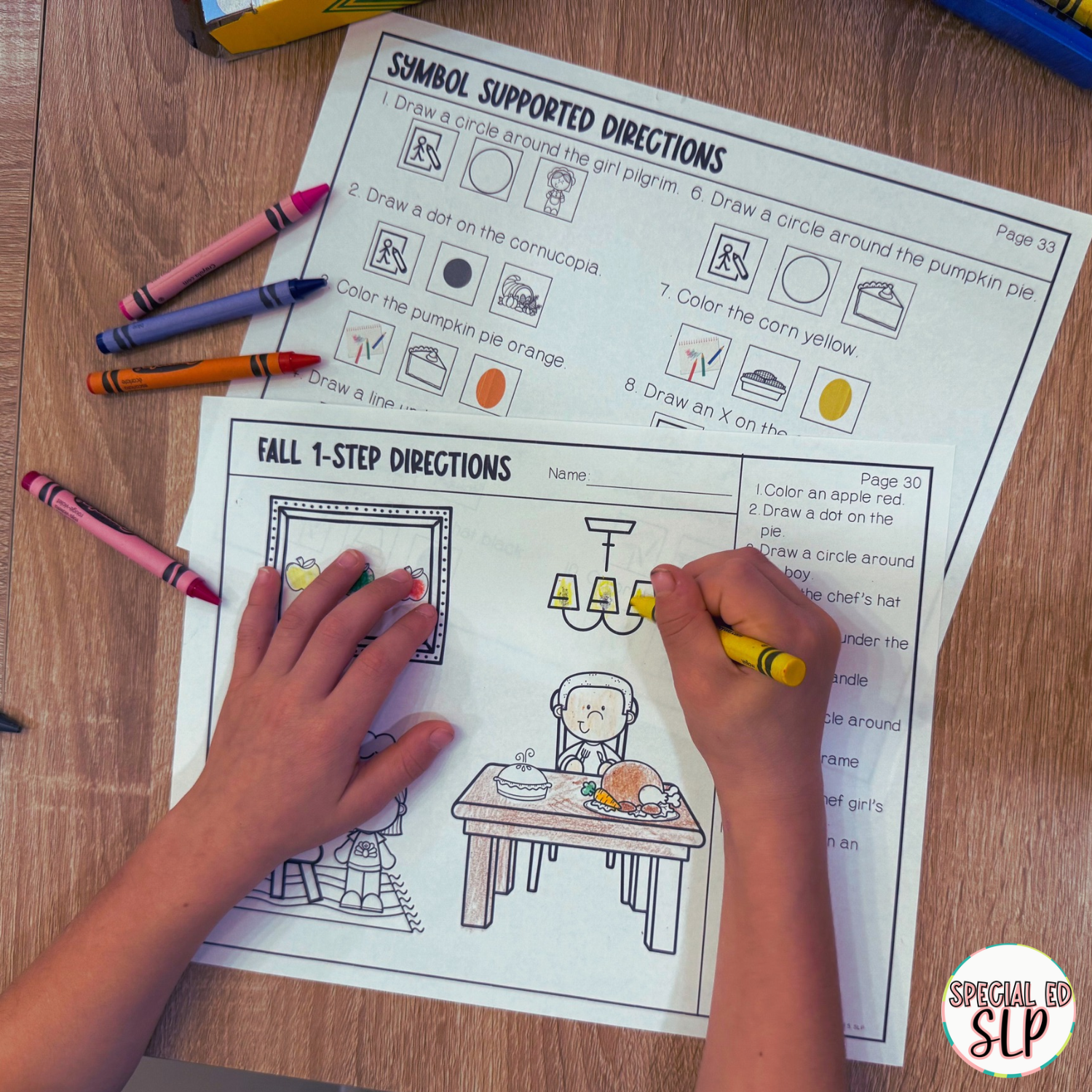
SLP Tip: Keep the visual field and language demands manageable when introducing a new concept. You can gradually increase the difficulty as the student becomes more independent.
For ideas on how to work on engaging ways to slowing progress from 1-2 step directions check this Fall Themed Following Directions Bundle with digital tasks cards and print and go fall coloring pages and fall activity worksheets.
2. Work on Prepositions and Spatial Concepts
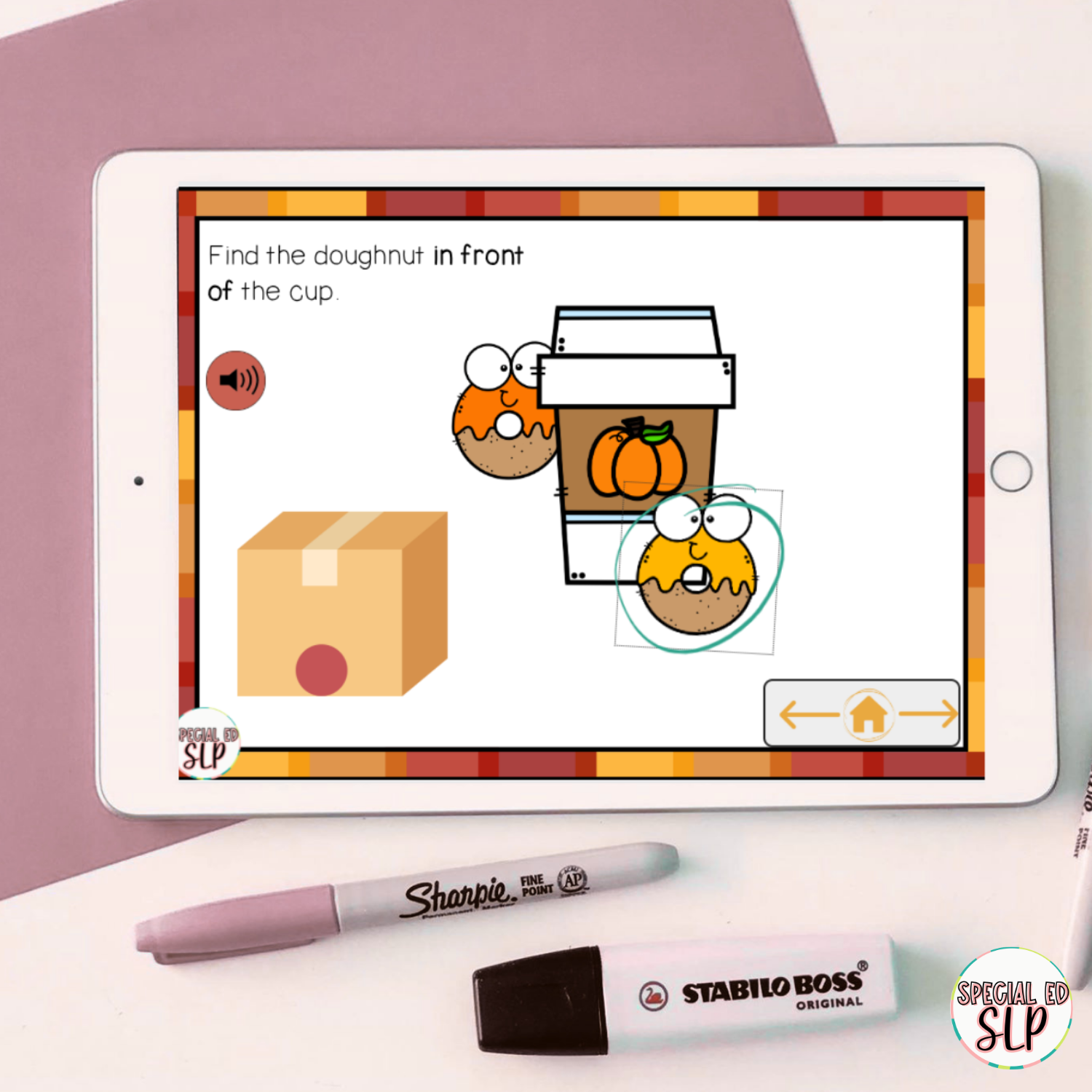
Fall scenes also provide plenty of opportunities to practice spatial language.
Instead of drilling prepositions in isolation, use visual scenes to help students connect the word to its meaning.
For example, you can work on concepts such as:
in
on
under
next to
above
below
Students might identify where an object is located, follow a direction containing a spatial concept, or describe a picture using the target word.
Visuals are especially helpful for special education or language disordered students because they can see the relationship between the objects while hearing the corresponding language for prepositions.
You can also work on the same concept receptively and expressively.
For receptive language practice, ask the student to identify a picture that demonstrates the concept. For expressive practice, show the student a scene and have them describe where an object is located.
Check these digital task cards out for receptive understanding on spatial concepts using fall themes with visuals for speech therapy.
3. Target WH Questions With Fall Vocabulary
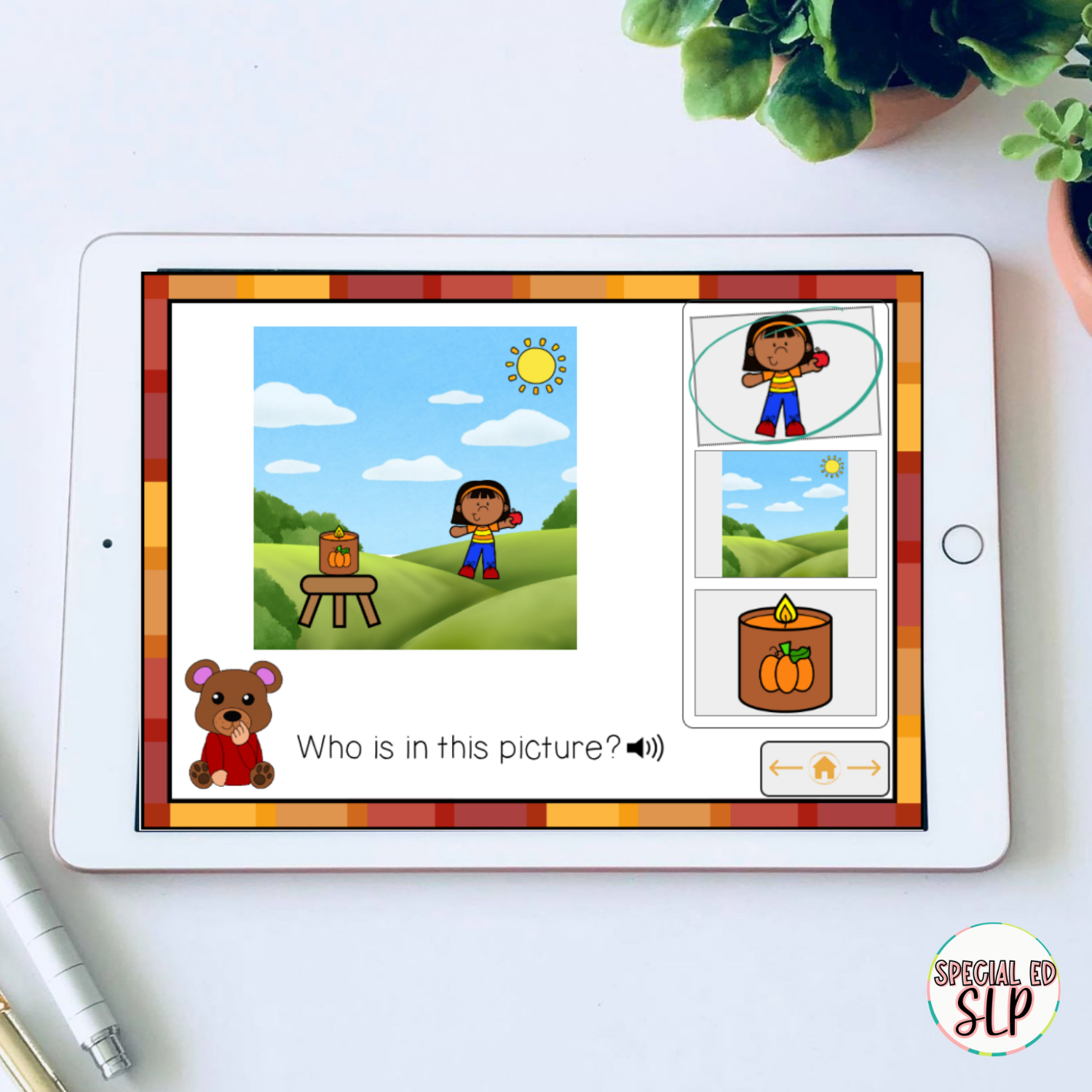
WH questions are easy to incorporate into fall speech therapy activities because seasonal pictures naturally create opportunities for asking who, what, where, and other questions.
You might show students a fall scene or individual picture and ask questions such as:
“What is this?”
“Where is the pumpkin?”
“Who is holding the apple?”
“What is the person doing?”
The exact questions you use will depend on the student's current language goals and level of support.
When a student has difficulty answering WH questions, visuals can help reduce some of the language demands. You can use pictures, choices, or other visual supports and gradually reduce those supports as appropriate.
You can also use the same pictures for multiple goals instead of constantly switching materials.
One fall scene might be used for WH questions, vocabulary, describing, spatial concepts, and following directions.
That makes seasonal materials particularly useful when you have a full caseload and limited prep time.
For Fall themed Boom cards that target WH Questions with picture choices, click the link.
4. Build Fall Vocabulary
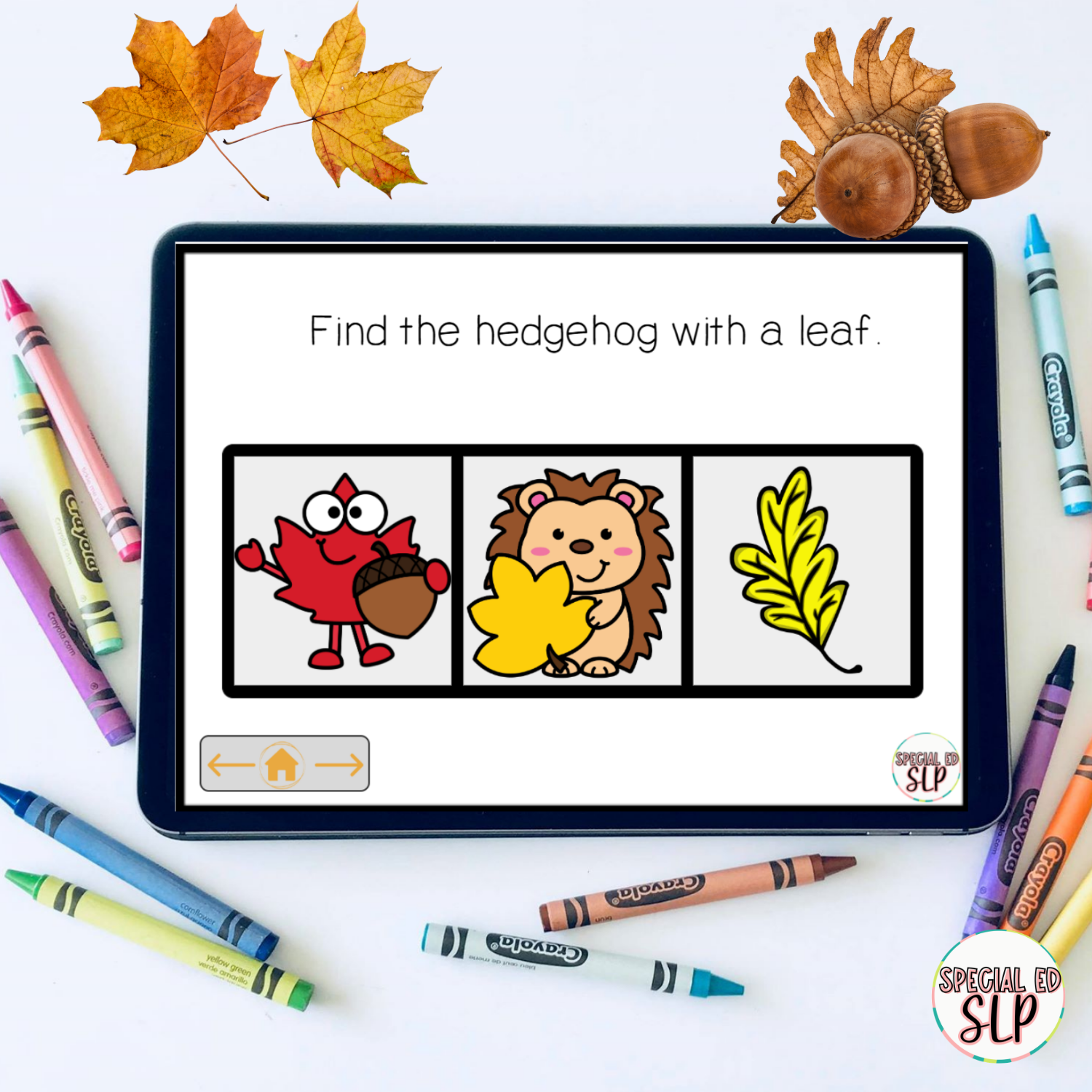
Fall gives you a ready-made collection of seasonal vocabulary to use during language therapy.
Depending on your students, you might target nouns, verbs, adjectives, categories, attributes, or combinations of concepts.
Rather than focusing only on labeling a picture, try varying the language demands.
A student could identify an item from a field of pictures, follow a direction containing one or two important vocabulary elements, answer a question about the picture, or describe an item using its features.
Check out these digital Boom Cards for Fall Vocabulary Flashcards that works up to two elements.
This gives students repeated exposure to vocabulary while using the words in different language tasks
5. Practice Describing With Visual Supports
Describing can be challenging for students who aren't sure what information they should include.
Visual supports can provide structure.
Start with a familiar fall picture and help the student notice specific features. Depending on the student's goals, you might work on characteristics such as color, size, shape, category, parts, or other descriptive words.
For example, instead of stopping after a student labels a picture as a “pumpkin,” you can expand the activity by asking questions that encourage additional details.
What color is it?
Is it big or small?
What does it look like?
What group does it belong to?
You can adjust the amount of visual and verbal support based on the student. Some students may benefit from choices or direct models, while others may be ready to generate descriptions more independently.
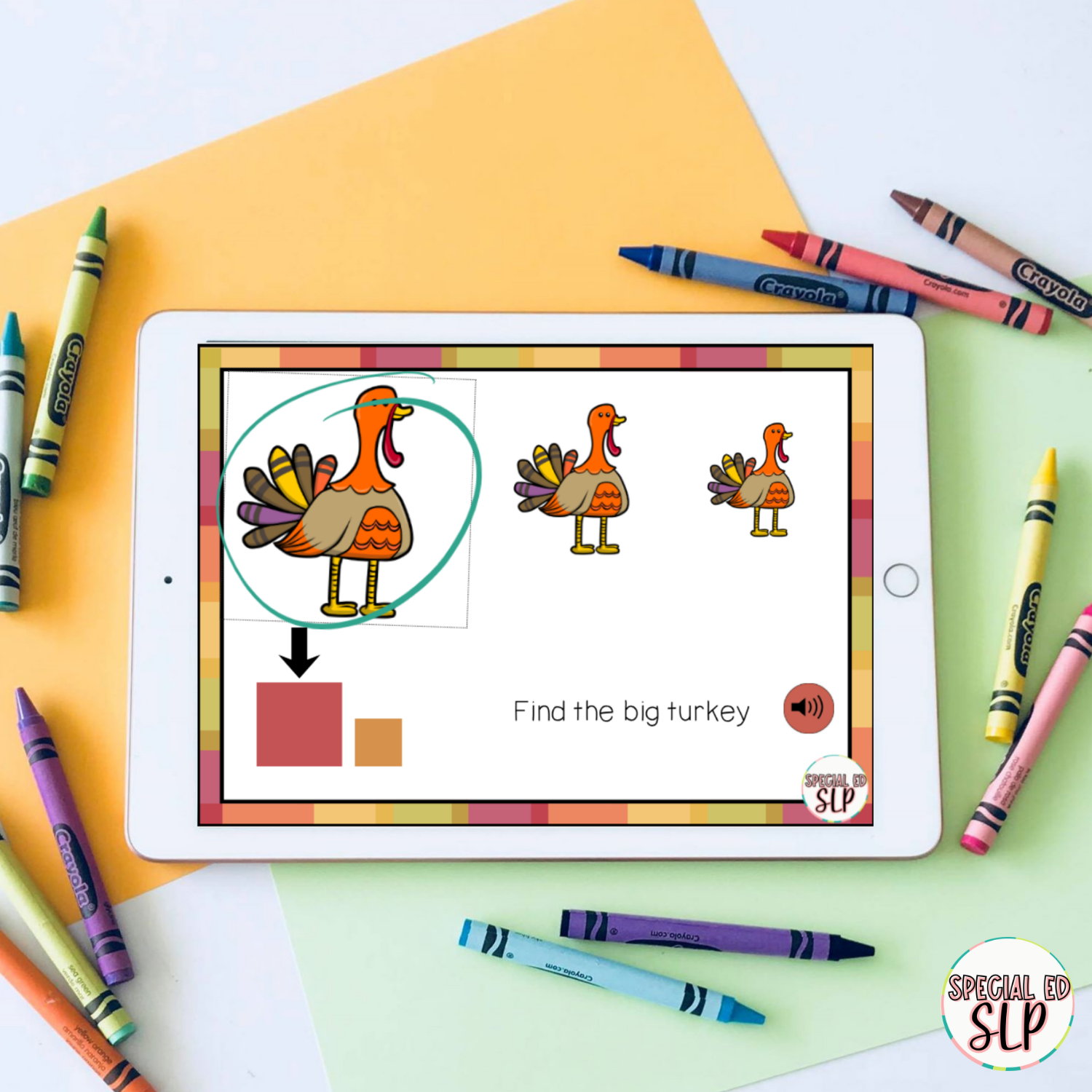
Check out these Fall Themed Big vs Small Boom Cards for working on understanding descriptive language.
The goal isn't simply to add more words. It is to help students notice meaningful characteristics and organize those ideas into language.
Want to Try a Free Fall Basic Concepts Activity?
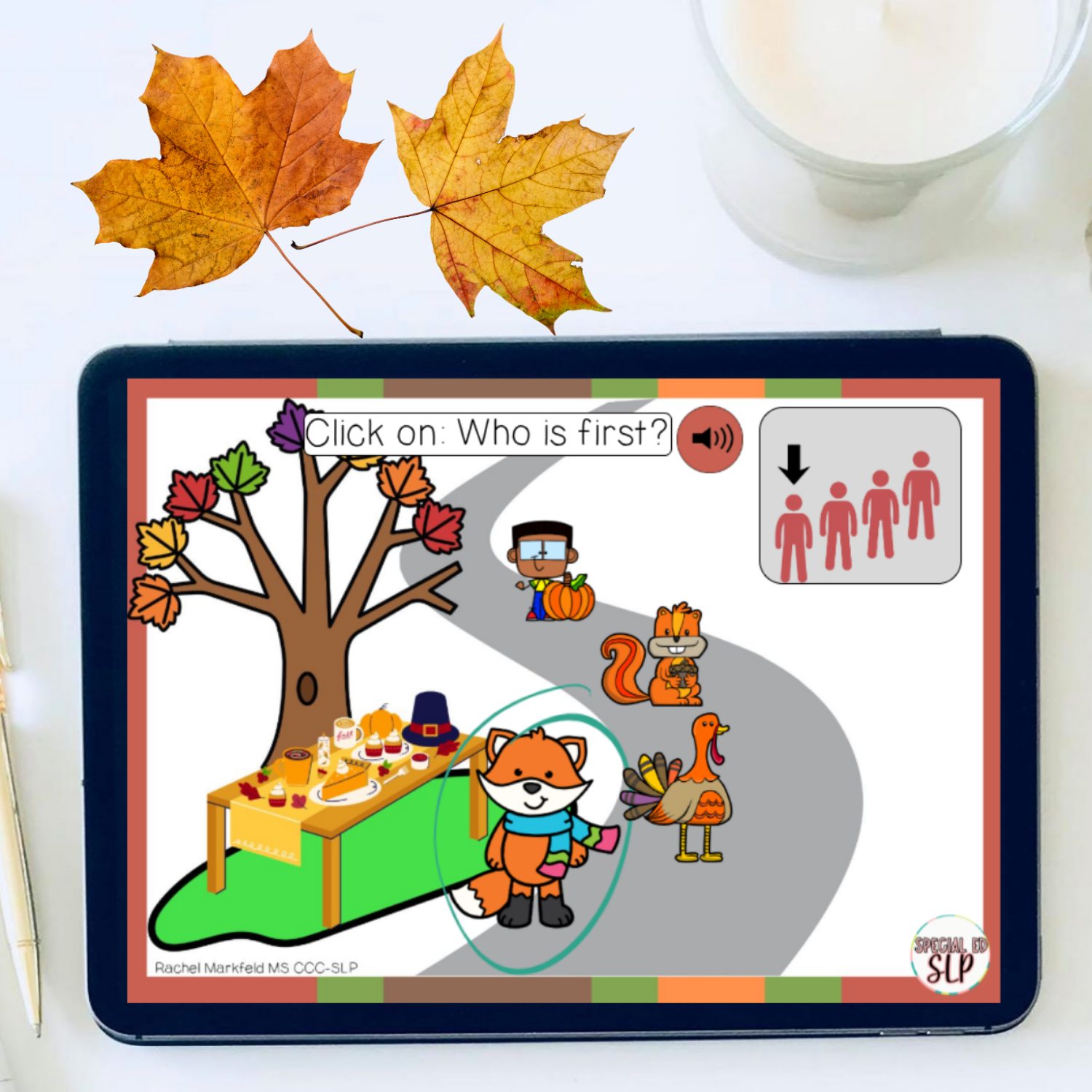
If you want to try a visual fall activity with your students, I have a FREE Basic Concepts First/Last Fall Theme Boom Cards activity you can use in your speech therapy sessions for learning temporal concepts.
The activity gives students practice with the concepts first and last using a fall theme and visual format.
It is an easy way to try this type of basic concepts practice with your students before adding more concepts to your therapy materials.
Grab the FREE First/Last Fall Boom Cards
Need More Fall Speech Therapy Activities for Basic Language Concepts?
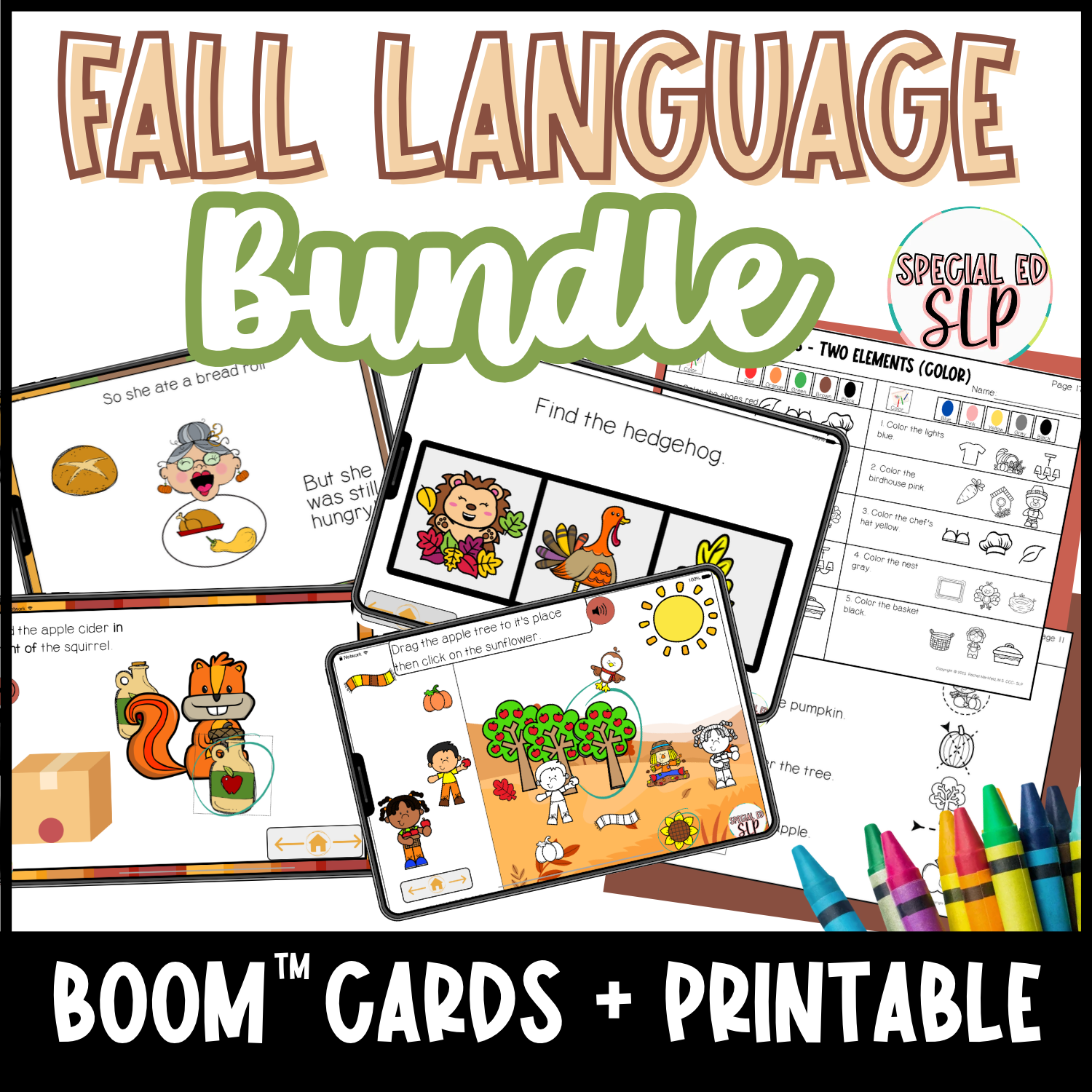
If your students need practice across multiple basic language skills, I also created a larger Basic Language Concepts Fall Theme Boom Cards and Printable Worksheets resource.
It includes Boom Cards and printable activities that can be used to work on skills including:
Make it stand out
Whatever it is, the way you tell your story online can make all the difference.
The “Old Lady Who Swallowed a Turkey” boom card companion for Thanksgiving
Having both digital and printable options also gives you flexibility in how you use the activities across your speech therapy sessions, whether in person or teletherapy.
You can use the visual activities to introduce or practice concepts and choose the format that works best for your students and therapy setting.
Fall Basic Language Concepts Activities
Make Your Fall Themed Speech Therapy Activities Work Harder
You don't need an entirely different activity for every language goal on your caseload.
With purposeful visual materials, one fall theme can give you opportunities to address following directions, spatial concepts, prepositions, WH questions, vocabulary, describing, and other basic language concepts.
Choose the language target your student needs, adjust the level of visual support, and look for ways to practice that skill across several activities.
And if you'd like an easy place to start, grab the FREE First/Last Boom Cards and add a little fall-themed basic concepts practice to your next speech therapy session.